
After the heat and health issues of Plovdiv, we were looking forward to moving on—especially in a nice, relaxed, cool train. But guess what? The train’s air conditioning was broken. Oh joy! It got so hot that staff started handing out bottles of water to passengers, and more than a few people ended up taking their tops off just to cope. Still, we survived, rolled into Stara Zagora, and headed straight for the mall for dinner. Why? Guaranteed air conditioning. Absolute bliss.
Stara Zagora was… well… an interesting place. If we’re honest, we’re not entirely sure why it even made our list. Maybe to see a “normal” Bulgarian town. Maybe just as a stopover between Plovdiv and Veliko Tarnovo. Whatever the reason, we set out exploring on the first day. But after about two hours, we’d basically finished. We walked into the town center, grabbed a coffee, strolled up and down the main pedestrian street, and checked out the Roman Forum ruins. Which, to be fair, pretty much are the main sights. Don’t get me wrong—it was pretty. Just a lot smaller than we had expected.


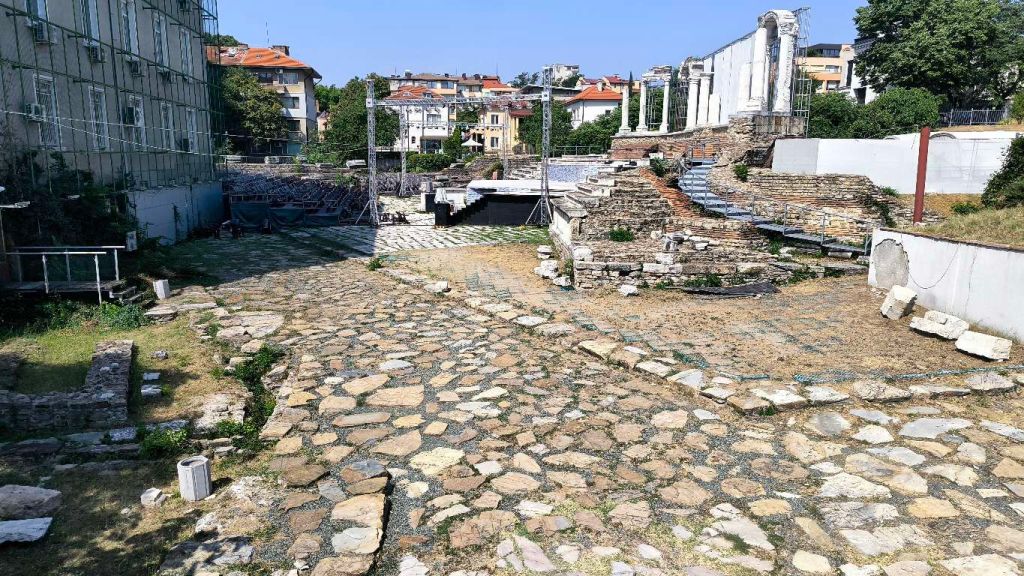

There were, however, quite a few museums that looked genuinely interesting. Unfortunately, in a triumph of illogical planning, every museum in Bulgaria closes on Mondays. All of them. No staggering, no exceptions. And, of course, we arrived on a Monday. Why they don’t spread closures across Monday and Tuesday is beyond us. Still, no matter—we did some more wandering, loitered in the mall, and saved the museums for the next day.
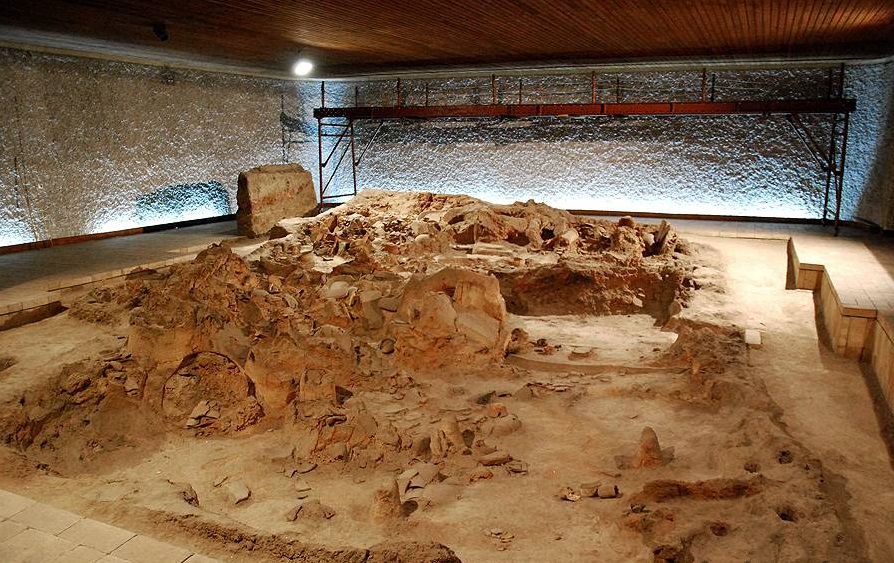
The first stop was the Neolithic Dwelling Museum. Small but fascinating, and entry was by knocking on the door until someone came to let us in. Inside was an excavated Neolithic house dating back to the 6th millennium BC. The museum was run by two wonderfully stereotypical archaeologists—older men with grey hair and magnificent beards—who were clearly very passionate about their work. Even without English, they guided us around using laser pointers, hand gestures, and signs to highlight the details of the house and artefacts. Sadly, no photos were allowed (so here’s one from Google).
Next was the History Museum, which had a slightly eerie charm. For such a small town, it was surprisingly impressive. The oddest part was how the lights were switched on and off as we entered each section—not by sensors, but manually. It turned out someone was literally following our progress through the museum and illuminating the way as we went. The highlight was the basement, where a preserved Roman road cut straight through the building.


The Museum of Religion promised a lot but didn’t quite deliver. Housed inside an old mosque, it displayed excavations of earlier chapels and Iron Age sacrifice pits. But everything felt a bit too… staged. Almost as if the ruins had been picked up and neatly arranged rather than left as they were.
Finally, there was the Art Museum. A grand building, yes, but filled with art that was, if we’re honest, rather average. Still, worth a wander.
The true highlight of Stara Zagora, however, came on our last evening. We cooked ourselves a simple dinner of meat and three veg—super basic, but somehow absolutely delicious after weeks of eating out. Afterwards, we wandered to the pedestrian street, grabbed a few beers, and sat outside watching the world go by. The best part? The weather had finally turned cool and gusty. It was the first time since Pristina that we’d been outdoors and actually felt comfortable. And it was superb.
Next stop: Veliko Tarnovo.







 2 Travelling Kiwis
Leave a comment