
Because we’d never done anything remotely like this before, there were a few things we tried to factor into the planning to make the whole experience a little easier.
The first was our camping setup.
After much humming and hawing, we realised that we were going to be spending around three weeks living in tents, and the idea of sharing one small tent for that long didn’t seem particularly appealing.
It’s fine for two or three nights.
But three weeks?
As most married couples probably know, your own space is pretty bloody golden.
So we decided to take one tent each.
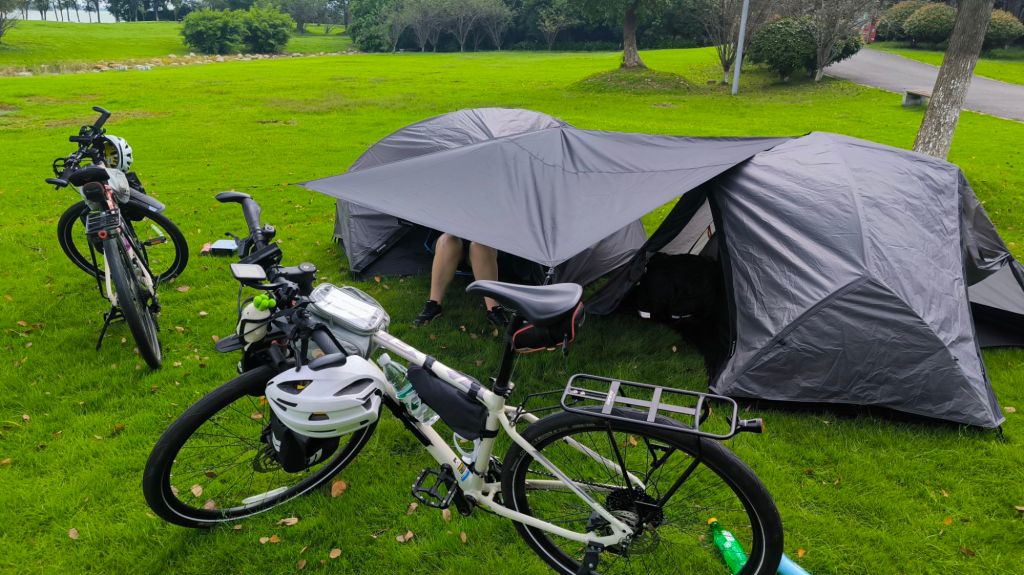
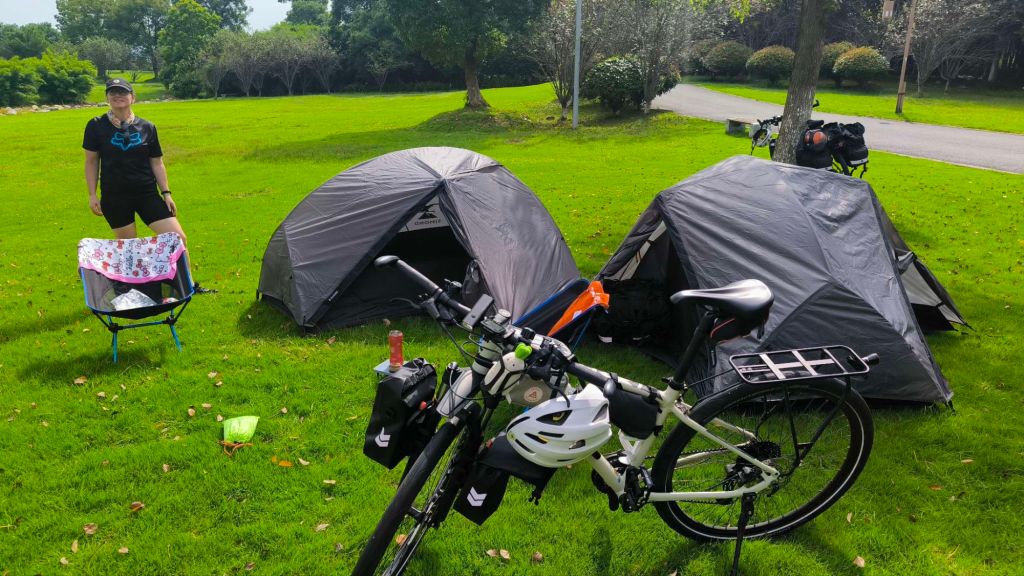
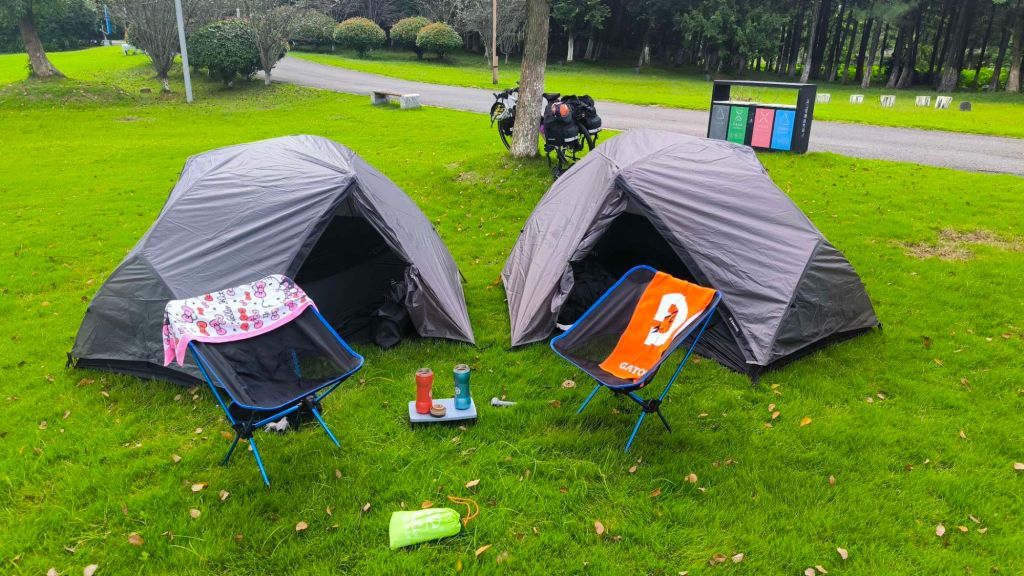
Technically, both tents were advertised as two-person tents, but realistically they’re much more like very comfortable one-person tents—especially when one of the occupants is Will.
The compromise was weight. Each tent weighs around 1.9 kilograms, so we were carrying considerably more tent than we technically needed. But we decided that having our own space would be worth every extra gram.
We particularly thought it would be important on rainy days. If we’re going to be stuck in camp all day because it’s absolutely pissing down, the ability to retreat into our own little tent rather than spending twelve hours sitting on top of each other seemed like a very good investment in our marriage.
The second major decision was how much cycling we actually wanted to do.
Rather than trying to travel as far as possible every day and cram in as many sights as we could, we decided to slow things down.
Our basic plan was simple:
One big cycling day.
One day staying put.
We would spend two nights in each location. The first day would be spent getting there, and the second would give us time to explore the area rather than simply passing through it.
But there was another, perhaps more important, reason for doing this.
We had absolutely no idea how our bodies were going to cope.
We were reasonably fit. We’d done plenty of cycling in China and had completed shorter bikepacking trips. But we’d never cycled for weeks at a time while carrying everything we needed to live.
So we built some insurance into the itinerary.
If we arrived somewhere absolutely destroyed, we’d have the following day to do nothing.
We could explore if we felt like it.
We could cycle a little if we wanted.
Or we could simply lie in our tents, recover and question why we’d thought this was a good idea in the first place.
For the first three weeks, that meant two nights in every location.
We also deliberately built in some bigger breaks.
After the first eight days, we’d spend three nights in an Airbnb, giving us a proper bed, a city to explore, and—perhaps most importantly—a chance to stop and take stock.
We could relax, catch up on things, buy anything we’d realised we desperately needed, and see how our bodies were holding up.
After that, we’d have another three nights in a cabin in a national park.
Again, the idea was simply to stop, reset and recuperate.
We could use the location to explore if we had the energy, or we could spend three days doing absolutely nothing.
That flexibility was important.
This wasn’t a race.
We weren’t trying to tick off every town or ride the maximum possible distance each day. We wanted to actually experience Hokkaido rather than spend six weeks staring at a GPS screen and wondering when the next hill was going to finish.
So, after all the planning, we had two key rules:
One tent each.
And:
Two nights in each location, with proper breaks built into the trip.
They seemed like sensible compromises.
Whether they would actually work in practice was another matter entirely.
We were about to find out.
 2 Travelling Kiwis
Leave a comment